
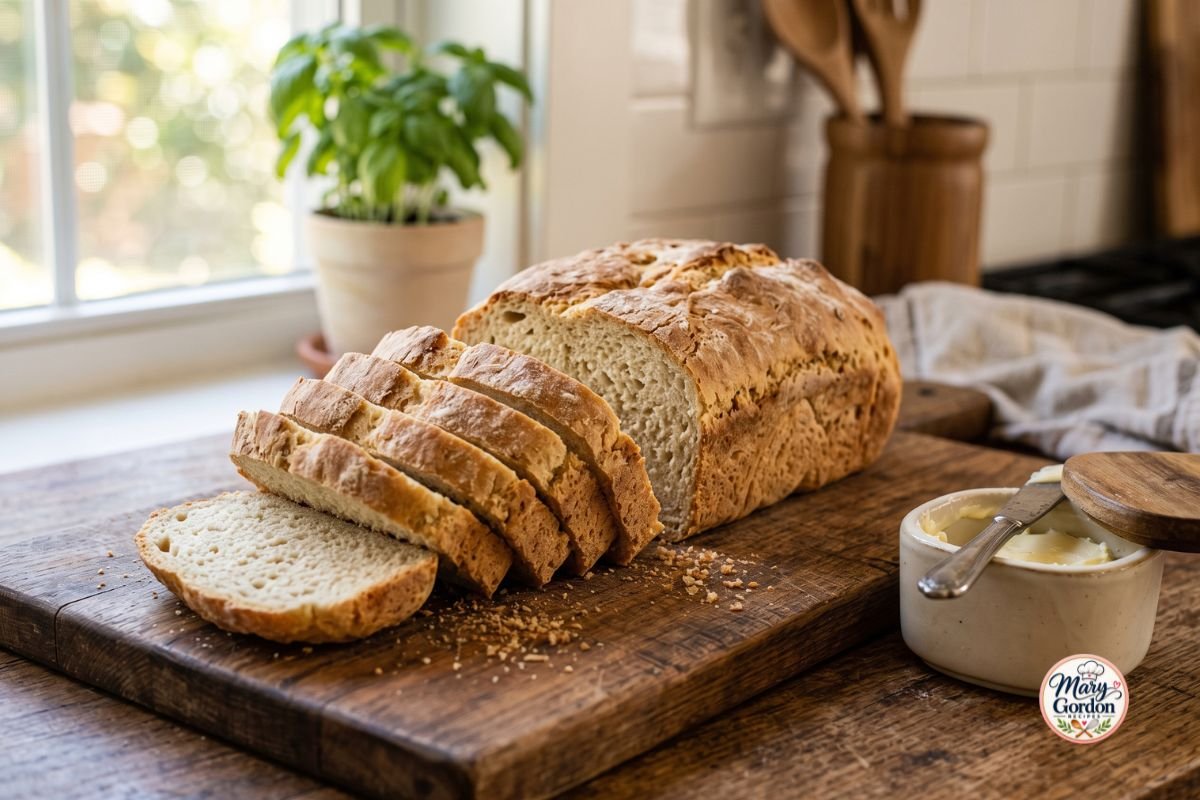
Finding a good homemade gluten free bread recipe doesn’t have to mean complicated ingredients or difficult baking techniques. This easy loaf is soft in the center, lightly golden on the outside, and sturdy enough for toast, sandwiches, and breakfast.
Instead of relying on complicated bread-making methods, this recipe uses a gluten-free all-purpose flour blend, eggs, warm milk, and a few simple pantry ingredients. The batter comes together quickly and goes straight into a loaf pan.
Important: If you need the bread to be strictly gluten-free because of celiac disease or gluten sensitivity, use ingredients that are specifically labeled gluten-free and avoid cross-contact with gluten-containing foods and equipment.
Why You’ll Love This Gluten Free Bread
- Easy homemade bread recipe
- No kneading required
- Soft and tender texture
- Great for toast and sandwiches
- Uses a gluten-free flour blend
- No complicated bread-shaping techniques
- Perfect for breakfast or lunch
- Freezes well
Ingredients
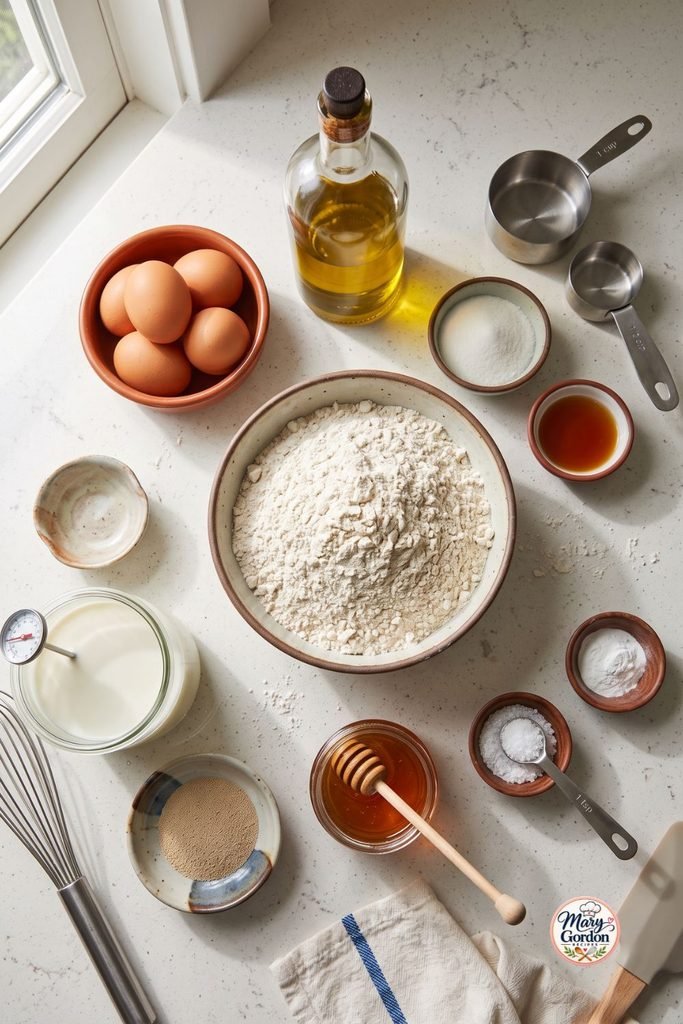
- 2 1/2 cups gluten-free all-purpose flour blend with xanthan gum
- 1 tablespoon instant yeast
- 2 tablespoons granulated sugar
- 1 teaspoon salt
- 1 teaspoon baking powder
- 1 cup warm milk
- 2 large eggs, room temperature
- 2 tablespoons olive oil
- 1 teaspoon apple cider vinegar
- 1 teaspoon honey
Optional
- 1 tablespoon melted butter for brushing the top
- 1 tablespoon sesame seeds
- 1 tablespoon poppy seeds
- 1 teaspoon dried herbs for a savory loaf
Flour note: Gluten-free flour blends vary considerably. For the most consistent result, use a blend designed as a 1:1 or all-purpose gluten-free baking flour and check whether it already contains xanthan gum. If it does not, follow the package guidance for adding it.
How to Make Gluten Free Bread
1. Prepare the Loaf Pan
Preheat your oven to 375°F.
Lightly grease a 9×5-inch loaf pan and line it with parchment paper, leaving some parchment over the sides for easy removal.
If you’re preparing this bread for someone who must avoid gluten, make sure your pan, utensils, mixer attachments, and work surface are clean and free from gluten-containing crumbs.
2. Activate the Yeast
Pour the warm milk into a small bowl.
The milk should feel warm but not hot. Stir in the sugar and instant yeast.
Let it stand for about 5 minutes.
The mixture should become slightly foamy.
3. Combine the Dry Ingredients
In a large mixing bowl, whisk together the gluten-free flour, salt, and baking powder.
Breaking up any lumps now will make it easier to achieve an even dough.
4. Add the Wet Ingredients
Add the eggs, olive oil, apple cider vinegar, honey, and yeast mixture to the dry ingredients.
Stir with a sturdy wooden spoon or use a stand mixer with a paddle attachment.
The mixture will look more like a thick, sticky batter than traditional wheat bread dough. That’s normal.
5. Mix the Dough
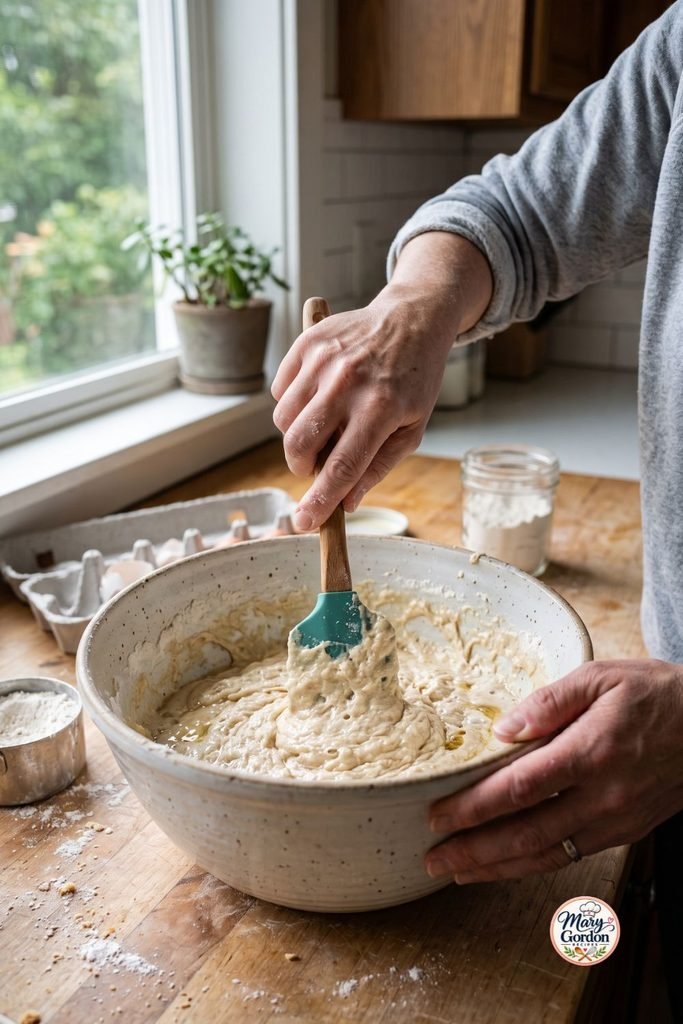
Beat or stir the mixture for approximately 3–4 minutes.
Scrape down the sides of the bowl as needed.
Do not add large amounts of extra flour simply because the dough looks sticky. Gluten-free bread dough generally needs more moisture than conventional wheat bread dough.
6. Transfer to the Pan
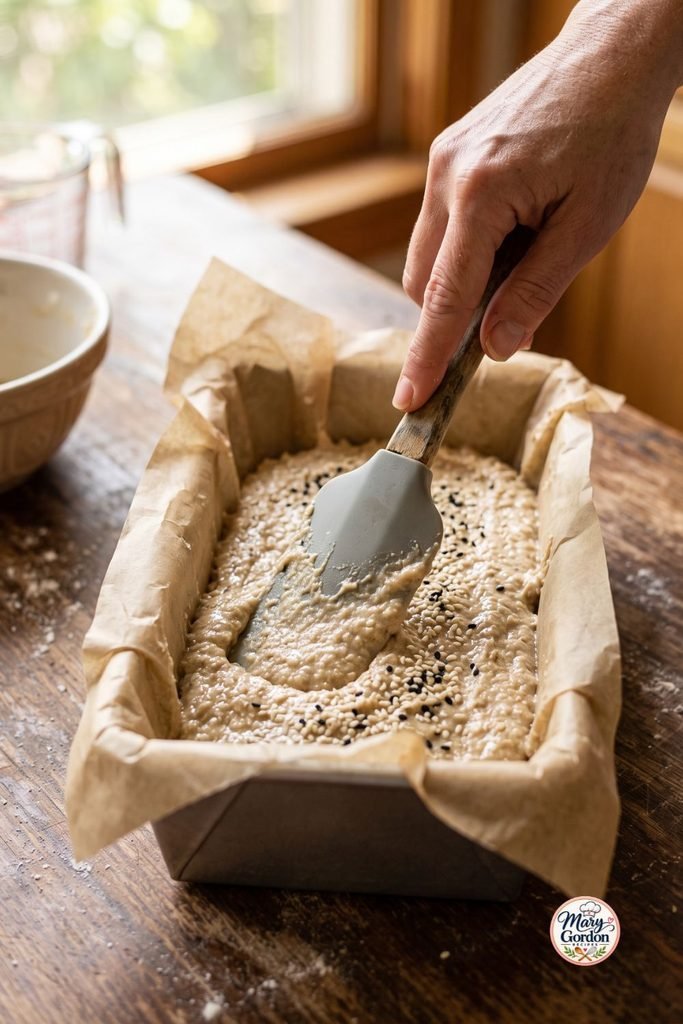
Spoon the dough into the prepared loaf pan.
Use a lightly oiled spatula to smooth the surface.
Try to spread the batter evenly from corner to corner.
If desired, sprinkle sesame seeds or poppy seeds over the top.
7. Let the Dough Rise
Cover the pan loosely with a clean kitchen towel.
Place it somewhere warm and allow it to rise for approximately 30–45 minutes.
The dough should noticeably increase in volume, but it does not necessarily need to double in size.
Avoid letting it rise too long, because an over-proofed gluten-free loaf can collapse during baking.
8. Bake
Place the loaf in the preheated oven.
Bake for approximately 35–45 minutes, until the top is golden brown and the loaf feels firm.
The exact baking time will depend on your flour blend and oven.
If the top becomes dark before the center is finished, loosely cover the loaf with foil for the remaining baking time.
9. Cool Completely
Remove the loaf from the oven and allow it to cool in the pan for about 10 minutes.
Lift it out using the parchment paper and transfer it to a wire rack.
Let the bread cool completely before slicing.
This is important because the inside continues setting as it cools.
10. Slice and Serve
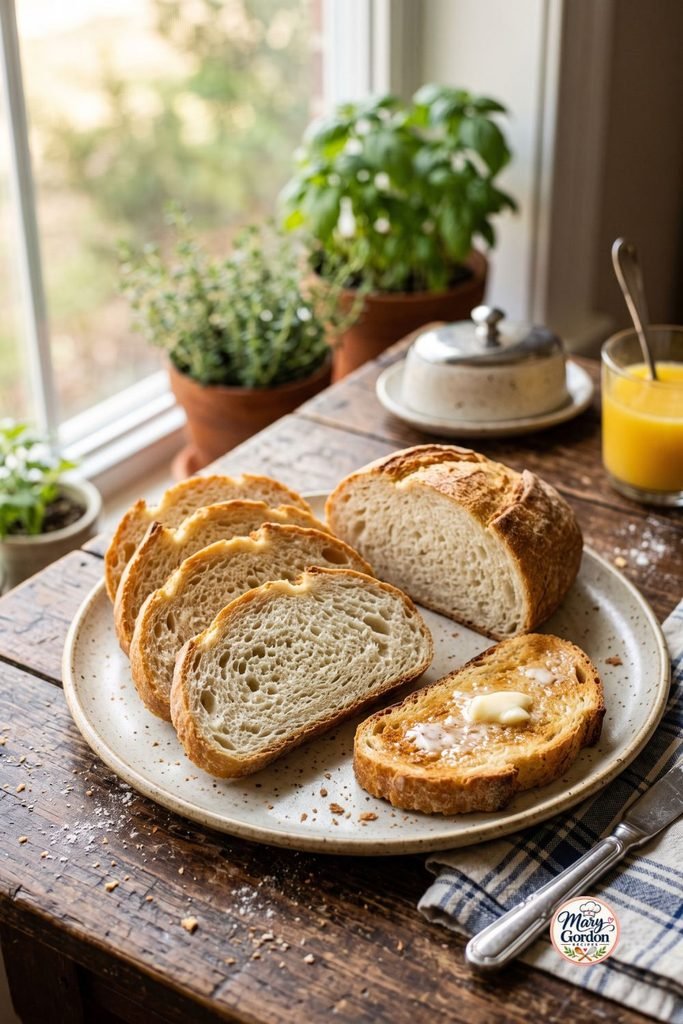
Once cooled, slice the bread with a serrated knife.
Serve it toasted with butter, use it for sandwiches, or enjoy it alongside soup or eggs.
Why Is My Gluten Free Bread Sticky Inside?
Gluten-free bread can remain gummy if it is underbaked or sliced while still warm.
Make sure the loaf is fully baked and allow it to cool completely before cutting.
Different gluten-free flour blends also absorb liquid differently, so the exact texture can vary from one brand to another.
Why Didn’t My Gluten Free Bread Rise?
Several things can affect the rise:
- Yeast that is no longer active
- Milk that was too hot or too cold
- An overly cool kitchen
- Too much or too little liquid
- Over-proofing
- A gluten-free flour blend with different ingredients
Give the dough enough time to rise in a warm, draft-free location.
Does Gluten Free Bread Need Xanthan Gum?
Many gluten-free bread recipes benefit from xanthan gum because it helps provide structure that gluten normally provides.
However, some commercial gluten-free flour blends already contain xanthan gum or another binder.
Always check the flour package before adding more.
Can I Make This Bread Dairy-Free?
Yes.
Replace the milk with an unsweetened dairy-free milk such as almond, oat, or another suitable alternative that is labeled gluten-free if required.
The flavor and texture may vary slightly depending on the milk used.
Can I Make Gluten Free Bread Without Eggs?
Eggs provide structure and moisture in this recipe, so replacing them may change the texture considerably.
For an egg-free version, use a tested gluten-free bread recipe specifically developed without eggs rather than simply removing them.
Can I Use Almond Flour?
Not as a direct replacement.
Almond flour has a very different structure and behaves differently from a gluten-free all-purpose flour blend.
For this recipe, use a gluten-free flour blend intended for bread or general baking.
Can I Add Seeds?
Yes.
Try adding:
- Sunflower seeds
- Pumpkin seeds
- Sesame seeds
- Chia seeds
- Flaxseed
Keep additions moderate so they don’t make the loaf too heavy.
How Should I Store Gluten Free Bread?
Once completely cooled, wrap the bread tightly or store it in an airtight container.
Keep it at room temperature for approximately 2–3 days.
Because homemade gluten-free bread can stale faster than some packaged breads, refrigeration or freezing can be useful for longer storage.
Can I Freeze Gluten Free Bread?
Yes.
Slice the completely cooled loaf and place parchment between slices.
Transfer the slices to a freezer-safe bag or container and freeze for up to approximately 3 months for the best quality.
Individual slices can go directly into a toaster from frozen.
Easy Variations
Gluten Free Herb Bread
Add 1 teaspoon each of dried rosemary, thyme, and Italian seasoning to the dry ingredients.
Gluten Free Seeded Bread
Add sunflower seeds and pumpkin seeds to the batter and sprinkle sesame seeds over the top.
Gluten Free Garlic Bread
Add 1/2 teaspoon garlic powder and 1 teaspoon dried parsley to the dough.
Gluten Free Cinnamon Bread
For a sweeter breakfast loaf, reduce the savory seasonings and add 1 teaspoon cinnamon plus a little extra honey.
Gluten Free Sandwich Bread
Bake the basic recipe without toppings and allow the loaf to cool completely before slicing thinly for sandwiches.
Recipe Card
Gluten Free Bread Recipe
Prep Time: 15 minutes
Rise Time: 30–45 minutes
Bake Time: 35–45 minutes
Total Time: About 1 hour 35 minutes
Yield: 1 loaf, about 10–12 slices
Ingredients
- 2 1/2 cups gluten-free all-purpose flour blend with xanthan gum
- 1 tablespoon instant yeast
- 2 tablespoons sugar
- 1 teaspoon salt
- 1 teaspoon baking powder
- 1 cup warm milk
- 2 large eggs
- 2 tablespoons olive oil
- 1 teaspoon apple cider vinegar
- 1 teaspoon honey
Instructions
- Preheat oven to 375°F.
- Grease and line a 9×5-inch loaf pan.
- Combine warm milk, sugar, and yeast. Let stand for 5 minutes.
- Whisk together gluten-free flour, salt, and baking powder.
- Add eggs, olive oil, vinegar, honey, and yeast mixture.
- Mix for 3–4 minutes until you have a thick, sticky dough.
- Transfer to the prepared loaf pan and smooth the top.
- Cover and let rise for 30–45 minutes.
- Bake for 35–45 minutes until golden and firm.
- Cool for 10 minutes in the pan.
- Transfer to a wire rack and cool completely.
- Slice and serve.
Storage: Keep airtight at room temperature for 2–3 days or freeze sliced bread for longer storage.