
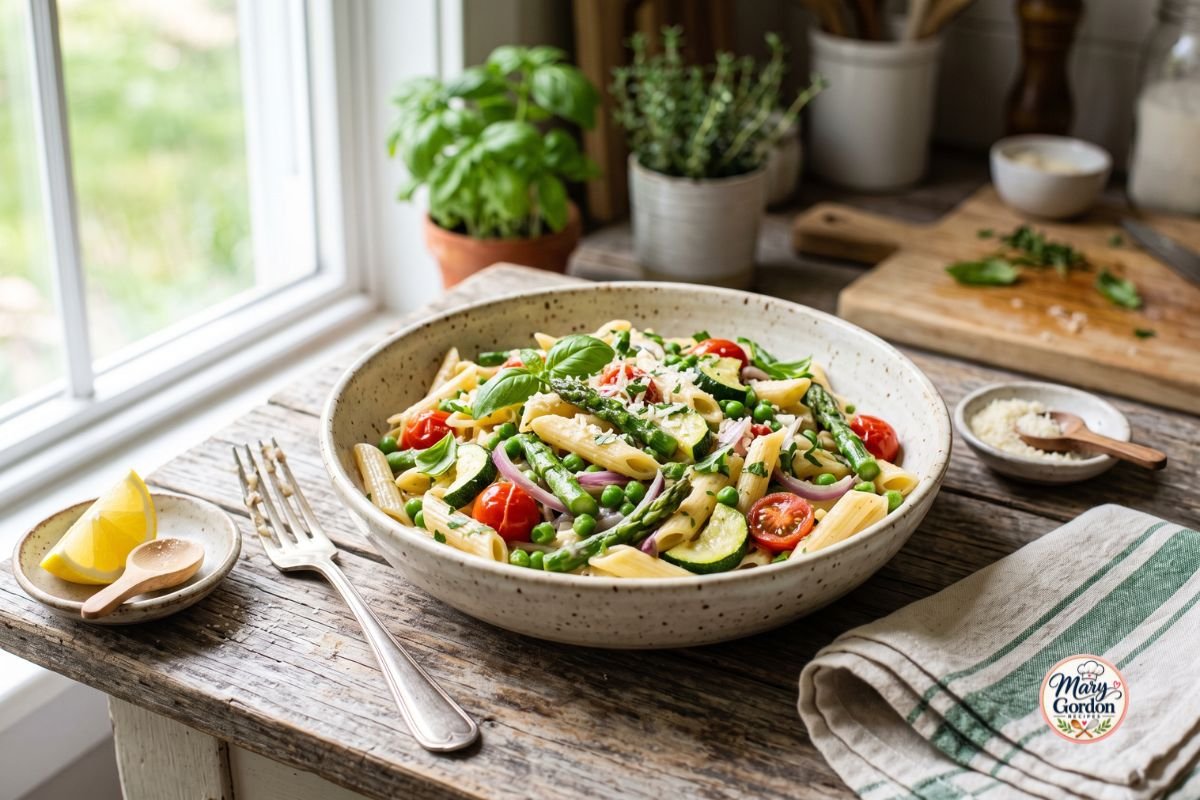
This easy spring vegetable pasta is a fresh, colorful, and comforting meal packed with crisp asparagus, sweet peas, tender zucchini, and cherry tomatoes.
The vegetables are lightly sautéed with garlic and olive oil before being tossed with pasta and a simple Parmesan sauce. A little lemon juice and fresh herbs brighten everything up, making this an easy recipe for spring lunches and dinners.
It’s simple enough for a busy weeknight but colorful enough for a spring gathering.
Why You’ll Love This Spring Vegetable Pasta
- Easy one-pan-style preparation
- Packed with fresh vegetables
- Bright spring flavors
- Ready in about 30 minutes
- Great for lunch or dinner
- Family-friendly
- Easy to customize
- Vegetarian-friendly
- Great for meal prep
- Uses simple ingredients
Ingredients
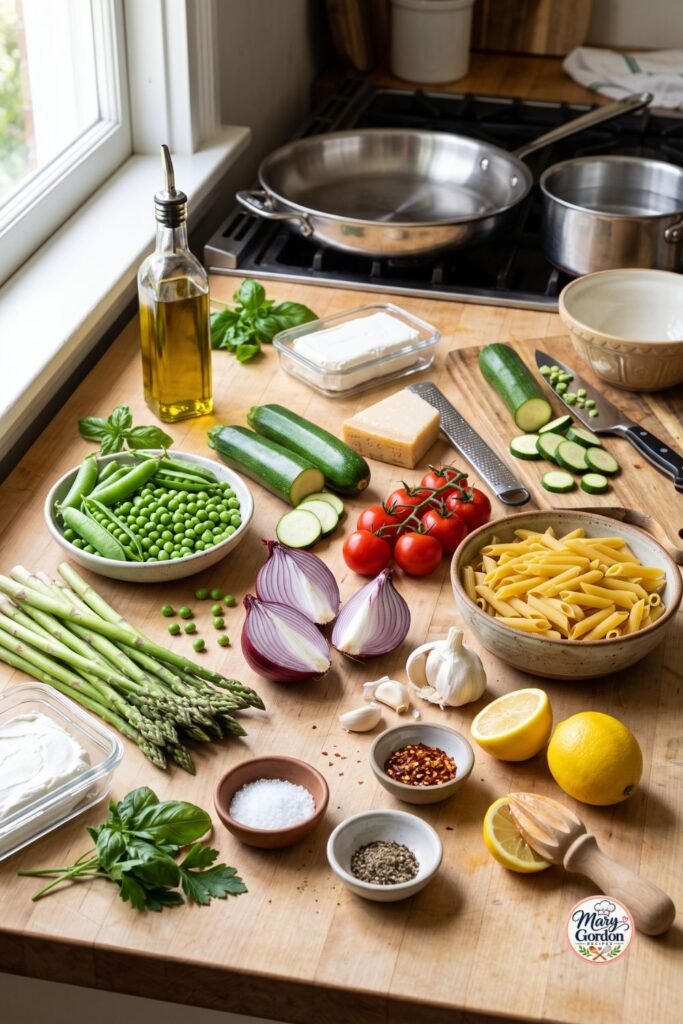
For the Pasta
- 12 ounces penne, bowtie, or fusilli pasta
- 1 tablespoon olive oil
- 3 cloves garlic, minced
- 1 cup asparagus, cut into bite-sized pieces
- 1 cup fresh or frozen green peas
- 1 small zucchini, diced
- 1 cup cherry tomatoes, halved
- 1/2 small red onion, thinly sliced
- 1/2 teaspoon salt
- 1/4 teaspoon black pepper
For the Sauce
- 1/2 cup low-sodium chicken or vegetable broth
- 1/3 cup grated Parmesan cheese
- 2 tablespoons cream cheese
- 1 tablespoon fresh lemon juice
- 1 teaspoon lemon zest
- 1/2 teaspoon Italian seasoning
- 2 tablespoons chopped fresh parsley
- 1 tablespoon chopped fresh basil
Optional Toppings
- Extra Parmesan
- Fresh basil
- Lemon zest
- Crushed red pepper flakes
- Toasted pine nuts
How to Make Easy Spring Vegetable Pasta
1. Cook the Pasta
Bring a large pot of salted water to a boil.
Add the pasta and cook according to the package directions until al dente.
Before draining, reserve about 1 cup of pasta water.
Drain the pasta and set it aside.
2. Prepare the Vegetables
While the pasta cooks, wash and prepare the vegetables.
Cut the asparagus into bite-sized pieces.
Dice the zucchini.
Halve the cherry tomatoes.
Slice the red onion.
3. Sauté the Onion and Garlic
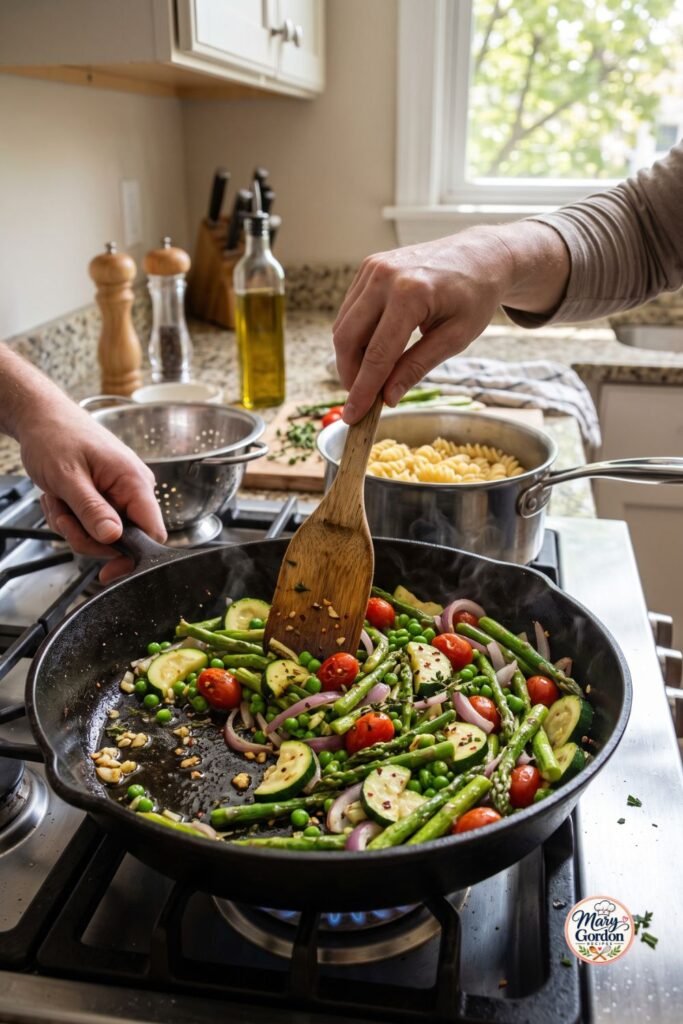
Heat olive oil in a large skillet over medium heat.
Add the sliced red onion and cook for 2–3 minutes.
Add minced garlic and cook for about 30 seconds, until fragrant.
4. Add the Asparagus
Add the asparagus to the skillet.
Cook for approximately 3 minutes.
It should become tender while retaining some crispness.
5. Add the Zucchini and Peas
Add diced zucchini and peas.
Cook for another 3–4 minutes, stirring occasionally.
Avoid overcooking the vegetables.
6. Add the Tomatoes
Add the halved cherry tomatoes.
Cook for approximately 1–2 minutes, just until they begin to soften.
7. Season the Vegetables
Add salt, black pepper, and Italian seasoning.
Stir gently.
8. Make the Sauce
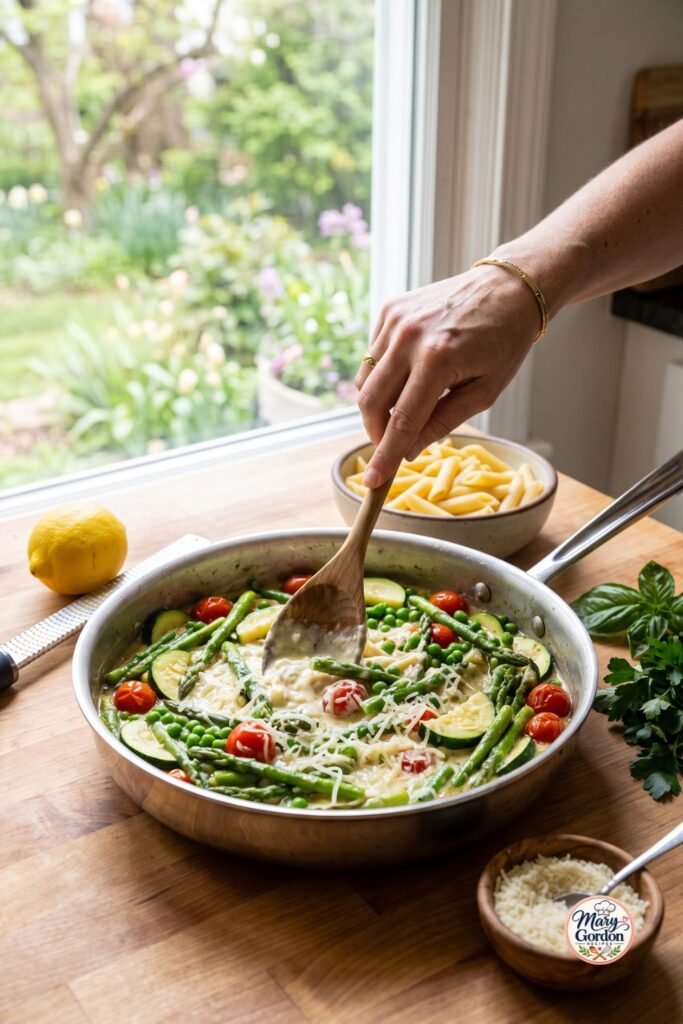
Pour the vegetable or chicken broth into the skillet.
Add cream cheese.
Stir until the cream cheese melts into the broth and creates a light creamy sauce.
9. Add Parmesan
Reduce the heat to low.
Add grated Parmesan and stir until incorporated.
If the sauce becomes too thick, add a splash of reserved pasta water.
10. Add Lemon
Add fresh lemon juice and lemon zest.
The lemon adds brightness and balances the creamy sauce.
11. Add the Pasta
Add the cooked pasta directly to the skillet.
Toss gently until the pasta is evenly coated with the sauce and vegetables.
12. Adjust the Consistency
Add reserved pasta water a little at a time if needed.
The sauce should lightly coat the pasta without becoming watery.
13. Add Fresh Herbs
Turn off the heat.
Add fresh parsley and basil.
Toss gently.
14. Taste and Adjust
Taste the pasta.
Add additional salt, black pepper, lemon juice, or Parmesan if needed.
15. Serve
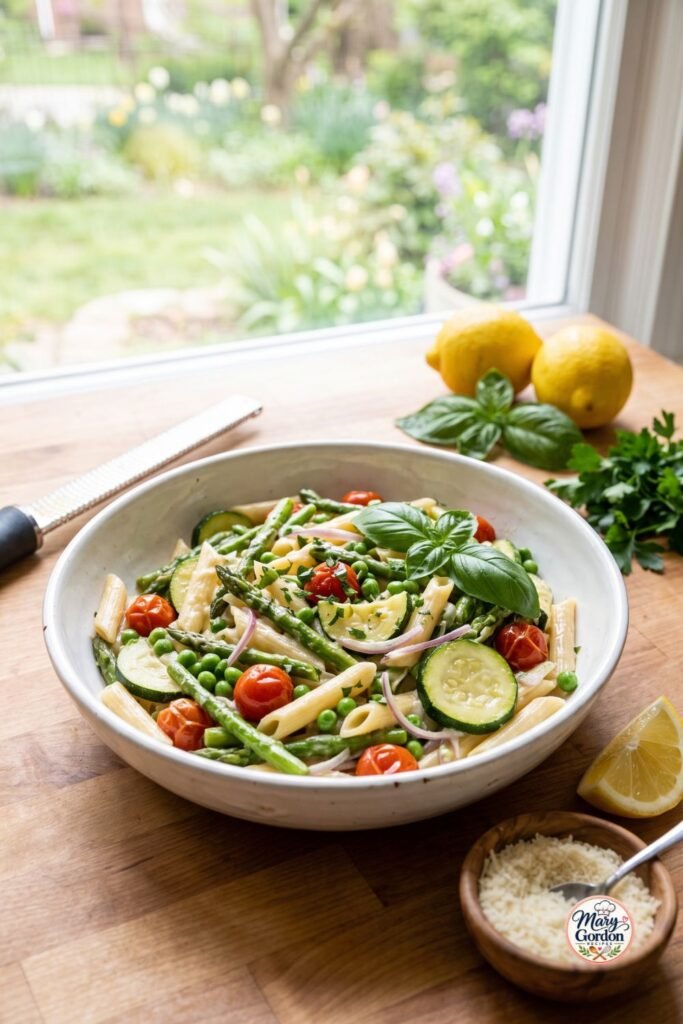
Transfer the pasta to serving bowls.
Top with extra Parmesan, fresh basil, lemon zest, and optional red pepper flakes.
Serve immediately.
What Vegetables Are Best for Spring Pasta?
Asparagus, peas, zucchini, and cherry tomatoes work particularly well.
You can also add:
- Broccoli
- Spinach
- Green beans
- Artichoke hearts
- Sugar snap peas
- Bell peppers
- Mushrooms
Can I Use Frozen Vegetables?
Yes.
Frozen peas work especially well.
You can also use frozen asparagus or mixed vegetables when fresh produce isn’t available.
Add frozen vegetables directly to the skillet and allow a little extra cooking time.
Can I Use Different Pasta?
Absolutely.
Good choices include:
- Penne
- Fusilli
- Bowtie
- Rotini
- Rigatoni
- Spaghetti
- Linguine
Short pasta shapes are especially good because they hold the vegetables and sauce.
Can I Make This Pasta Vegan?
Yes.
Use vegetable broth, dairy-free cream cheese, and dairy-free Parmesan alternatives.
Replace the Parmesan with nutritional yeast if desired.
Can I Add Chicken?
Absolutely.
Grilled or sautéed chicken makes this spring vegetable pasta a more substantial protein-rich meal.
Slice cooked chicken and toss it into the pasta before serving.
Can I Add Shrimp?
Yes.
Shrimp pairs especially well with lemon, garlic, asparagus, and Parmesan.
Cook the shrimp separately and add it to the finished pasta.
Can I Add More Protein?
For a higher-protein version, add:
- Grilled chicken
- Shrimp
- White beans
- Chickpeas
- Edamame
- Turkey sausage
You can also use a higher-protein pasta.
How Do I Keep the Vegetables Crisp?
Avoid overcooking them.
Add the vegetables in stages based on how quickly they cook.
Asparagus goes in first, followed by zucchini and peas, with tomatoes added near the end.
Can I Make This Ahead of Time?
Yes.
Cook the pasta and vegetables ahead of time and store them separately if possible.
For the best texture, combine everything with the sauce shortly before serving.
How Long Does Spring Vegetable Pasta Last?
Store leftovers in an airtight container in the refrigerator for up to 3–4 days.
The vegetables may soften slightly after refrigeration.
How to Reheat
Reheat gently in a skillet over medium-low heat.
Add a splash of broth or water to loosen the sauce.
You can also microwave individual portions in short intervals, stirring between each interval.
Can I Freeze This Pasta?
You can freeze it, but the vegetables and creamy sauce may change texture after thawing.
For the best quality, enjoy it fresh or refrigerated.
Easy Spring Vegetable Pasta Variations
Lemon Garlic Vegetable Pasta
Increase the lemon juice and garlic for a brighter flavor.
Creamy Spring Pasta
Add an extra tablespoon or two of cream cheese for a richer sauce.
Chicken Spring Vegetable Pasta
Add sliced grilled chicken for extra protein.
Shrimp Spring Pasta
Add sautéed shrimp with lemon and garlic.
Pesto Spring Vegetable Pasta
Replace the Parmesan sauce with fresh basil pesto.
Spicy Spring Vegetable Pasta
Add crushed red pepper flakes or a little chili oil.
Mediterranean Spring Pasta
Add feta cheese, olives, spinach, and artichoke hearts.
One-Pot Spring Pasta
Cook the pasta directly in the sauce with additional broth, then add the vegetables toward the end.
Can I Use Cream Instead of Cream Cheese?
Yes.
Use a small amount of heavy cream or half-and-half for a smoother sauce.
What Can I Serve With Spring Vegetable Pasta?
Serve it with:
- Garlic bread
- Green salad
- Grilled chicken
- Roasted vegetables
- Fresh fruit
- Crusty bread
- Lemon water
Frequently Asked Questions
Is spring vegetable pasta healthy?
It can be part of a balanced meal because it combines pasta with a generous amount of vegetables. Portion size and ingredients determine the overall nutrition.
Can I make this recipe gluten-free?
Yes. Use your favorite gluten-free pasta and verify that all packaged ingredients are gluten-free.
Can I use frozen peas?
Yes. Frozen peas are convenient and work very well in this recipe.
Can I use broccoli?
Absolutely. Cut broccoli into small florets and add it with the asparagus.
Can I use spinach?
Yes. Stir fresh spinach in during the final few minutes of cooking.
Why is my sauce too thick?
Add reserved pasta water or broth a tablespoon at a time until the desired consistency is reached.
Why is my sauce too thin?
Simmer gently for a few minutes, stirring frequently, until it thickens.
Can I use Parmesan from a container?
Yes, although freshly grated Parmesan usually melts more smoothly into the sauce.
Can I make this without cream cheese?
Yes. Add a little extra Parmesan and pasta water for a lighter sauce, or use a splash of cream.
Can I serve this cold?
Yes. Allow it to cool completely and serve it as a spring pasta salad, although the creamy version is best warm.
Recipe Card
Easy Spring Vegetable Pasta
Prep Time: 15 minutes
Cook Time: 15 minutes
Total Time: About 30 minutes
Servings: 4
Course: Lunch / Dinner
Cuisine: American-inspired
Ingredients
- 12 ounces pasta
- 1 tablespoon olive oil
- 3 cloves garlic
- 1 cup asparagus
- 1 cup peas
- 1 small zucchini
- 1 cup cherry tomatoes
- 1/2 small red onion
- 1/2 cup vegetable or chicken broth
- 1/3 cup Parmesan
- 2 tablespoons cream cheese
- 1 tablespoon lemon juice
- 1 teaspoon lemon zest
- 1/2 teaspoon Italian seasoning
- 2 tablespoons fresh parsley
- 1 tablespoon fresh basil
- Salt and black pepper
Instructions
- Cook pasta until al dente and reserve 1 cup pasta water.
- Heat olive oil in a large skillet.
- Sauté red onion and garlic.
- Add asparagus and cook for about 3 minutes.
- Add zucchini and peas.
- Add cherry tomatoes.
- Season with salt, pepper, and Italian seasoning.
- Add broth and cream cheese.
- Stir until creamy.
- Add Parmesan.
- Add lemon juice and zest.
- Add cooked pasta.
- Toss until evenly coated.
- Add pasta water if needed.
- Stir in fresh parsley and basil.
- Garnish with Parmesan and fresh herbs.
- Serve warm.